Camping, Outdoors & Garden / PRODUCT GUIDE
FosPower A1 emergency radio: four power options in one compact kit
The orange A1 combines NOAA, AM and FM reception with a 2,000mAh rechargeable battery, hand crank, small solar panel, AAA backup, flashlight and reading light. It is a useful all-in-one emergency radio, but its power bank is for limited phone charging—not a replacement for a charged high-capacity battery pack.
As an Amazon Associate I earn from qualifying purchases.
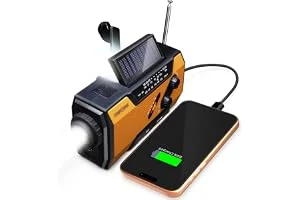
Match the orange A1 before comparing battery claims
ASIN B07FKYHTWP is the orange FosPower A1, model FOSPWB-2376. FosPower labels its internal battery as both 7,400mWh and 2,000mAh at 3.7 volts. Those are two ways of describing the same battery, not two separate capacities. The company sells other radios with different batteries, ports and controls, so confirm the A1 model and included USB-C-to-USB-A cable on the live offer.
Use NOAA reception as the primary job
The A1 tunes the seven U.S. NOAA weather-band frequencies from 162.400 to 162.550 MHz in addition to AM and FM. Reception depends on location, terrain, building materials and antenna position. Before storm season, learn which NOAA transmitter serves your area and test reception where the radio will be stored. A radio that has never been tuned is not a finished preparedness plan.
Four power paths are useful for different moments
The radio can run from its rechargeable lithium-ion battery, three AAA batteries, the hand crank or the integrated solar panel. Keep fresh AAA cells outside the radio if the manual recommends that for long storage, and inspect them on a schedule. Treat the crank and small solar panel as slow emergency inputs for essential radio or light use. Charge the internal battery by cable before an outage instead of expecting the sun or a few turns of the crank to start from empty.
The phone output is an emergency top-up
FosPower describes the 2,000mAh internal cell as a power bank for small USB devices. Conversion losses and the radio’s own needs mean a phone will receive less than the battery’s label suggests. Use it for a short call, message or map check, then preserve energy for information and lighting. A separate 10,000–20,000mAh bank is the better everyday choice when fully charging a modern phone matters.
Two lights cover different tasks
The front flashlight is rated at 1 watt and 20 lumens; the hinged four-LED panel spreads light over a table or room. Position the reading light low enough that it does not glare into everyone’s eyes. Keep a separate headlamp or lantern available for hands-free movement. An emergency radio light is valuable redundancy, not the only illumination a household should depend on.
Understand the IPX3 boundary
FosPower lists IPX3 water resistance. That is limited splash protection, not submersion, heavy-rain or saltwater proofing. Keep the ports covered as directed and store the radio in a dry interior container. If it gets damp, turn it off and follow the manual before charging. Do not put it outside merely because a solar panel is built into the case.
Compare Midland ER10VP for a simpler AA-powered pocket radio
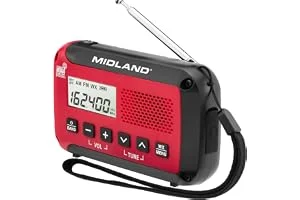
The photographed Midland ER10VP runs on three included AA batteries and focuses on AM, FM, NOAA weather channels, audible/visual alerts and a two-level flashlight with SOS strobe. It is roughly 5 by 3 by 1.2 inches and omits the A1’s crank, solar panel and phone output. Choose it when compact replaceable-battery reception matters more than an all-in-one charging system.
Compare C.Crane CC Pocket for listening controls and long AA runtime
The photographed CC Pocket uses two AA batteries, offers AM, FM, seven NOAA channels, 55 presets, a weather-alert mode, clock, alarm, sleep timer and included earbuds. C.Crane lists approximately 80 hours through the speaker or 100 hours through earbuds under its conditions. It lacks a crank, solar panel and device charger. Choose it for compact listening and tuning features, not as a multi-tool emergency power source.
The buying call
Choose the FosPower A1 if you want radio, lights and several backup power methods in one 10.9-ounce unit and accept that the crank, solar panel and 2,000mAh bank are limited. Choose Midland for a simple three-AA alert radio or C.Crane for deeper pocket-radio controls. Ryan has not claimed to own or test the A1; this guide uses FosPower’s published model specifications and the comparison manufacturers’ documentation.
Compare the shopping options
Midland ER10VP — compact three-AA weather-alert radio
C.Crane CC Pocket — compact radio with presets and weather alert
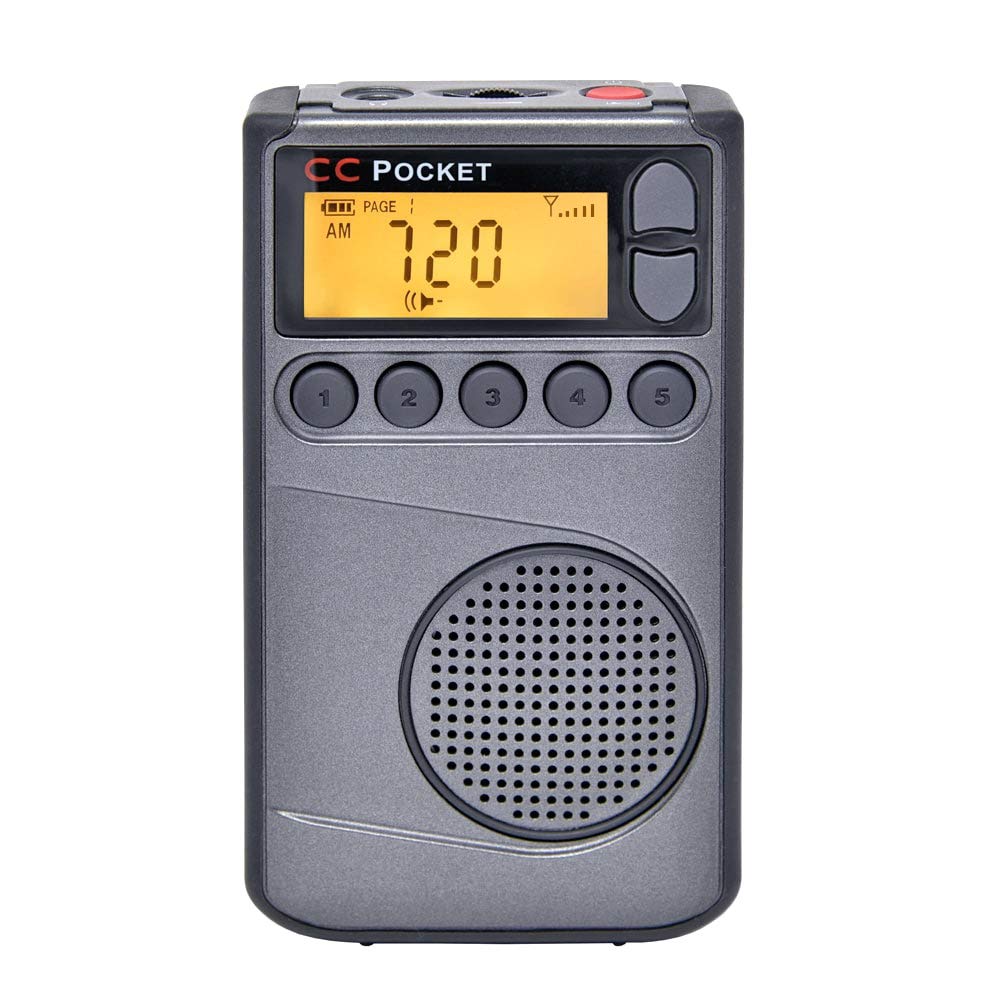
Product photo: Electroeshop retailer product photo
Sources and review basis
Researched November 19, 2026. Ryan’s own experience is attributed where supplied. Other judgments are buying advice based on the cited product information, not a hands-on comparison or laboratory test. Prices and availability are checked at the retailer.
- FosPower official A1 specifications, power sources, lights and package contents
- Amazon listing for FosPower A1, ASIN B07FKYHTWP (paid link)
- Midland official ER10VP dimensions, features and included batteries
- C.Crane official CC Pocket specifications and included accessories
- Product photo: C.Crane CC Pocket — compact radio with presets and weather alert