Computers, Tablets & Accessories / PRODUCT GUIDE
Seagate STGX2000400 2TB Portable Drive: inexpensive capacity with hard-drive tradeoffs
This 2TB bus-powered portable hard drive uses USB 3.0, includes a USB cable and weighs far less than a desktop drive. It is a practical backup or overflow drive when capacity matters more than speed, but it contains a spinning disk, uses the older Micro-B connector and needs a second copy of any irreplaceable file.
As an Amazon Associate I earn from qualifying purchases.
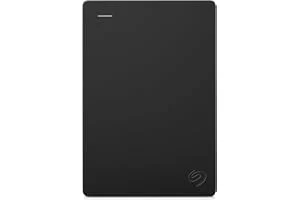
View Seagate 2TB Portable Hard Drive on Amazon (paid link) ↗
Confirm STGX2000400, not a similarly named Expansion drive
ASIN B07CRG94G3 identifies the black Seagate Portable Drive model STGX2000400 with 2TB of advertised capacity. Seagate also sells Expansion, Backup Plus and Game Drive products that can look similar but use different model numbers, software bundles and warranties. Match the STGX2000400 number on the listing and delivered label before applying instructions or judging a comparison.
Two terabytes is decimal capacity, not the space an operating system displays
Drive makers define one terabyte as one trillion bytes. Formatting metadata and the binary units used by some operating systems make the displayed number look smaller even when the drive is functioning normally. Leave free working space for large transfers, and do not plan a backup workflow around filling every available byte. The 2TB label is useful for comparing capacities, not a promise of exactly 2,000 displayed gigabytes.
It is a mechanical hard drive
The enclosure contains a spinning hard disk rather than flash memory. That usually provides more capacity per dollar than a portable SSD, but it brings moving parts, seek latency and greater sensitivity to bumps while operating. Put it on a stable surface, let transfers finish, eject it through the operating system and wait for activity to stop before moving or unplugging it. A padded case reduces scratches but does not make an active hard drive impact-proof.
USB 3.0 is backward compatible, with a speed penalty
Seagate specifies a SuperSpeed USB 3.0 connection and backward compatibility with USB 2.0 at USB 2.0 speeds. The included cable terminates in the drive’s wide Micro-B USB 3.0 connector and a computer’s USB-A port. A USB-C-only computer needs a data-capable adapter or replacement cable. The interface’s theoretical rate is not the drive’s sustained file-transfer speed; workload, fragmentation and the host all matter.
One cable normally carries data and power
The portable drive is bus-powered and does not use the separate AC brick found with many desktop hard drives. That makes it convenient with a laptop, but an unpowered hub or low-power port can cause disconnects or failure to mount. Connect directly to the computer when diagnosing problems. Do not use a charge-only cable, and replace a loose or damaged Micro-B cable rather than holding it at an angle.
Formatting determines where it works
A drive sold for Windows may arrive in a Windows-oriented file system. macOS can generally read NTFS but does not write to it natively, while game consoles, smart TVs and cameras have their own format and capacity rules. Before storing files, choose a file system for the actual devices and confirm whether reformatting erases existing contents. A cross-platform format such as exFAT improves interoperability but does not create versioned backups or repair media errors.
A drive copy is not automatically a backup
If the Seagate is the only place a file exists, the file is not backed up. Keep at least one additional copy on a separate device or trusted cloud service, and disconnect one backup when it is not being updated so accidental deletion, malware or an electrical event cannot affect every copy at once. Test restoring a few files; a successful copy command is not proof that an entire archive is readable.
Use it for capacity-first jobs, not every live workflow
This model makes sense for photo archives, completed video projects, computer backups and files that do not need SSD responsiveness. Editing high-bitrate multicamera footage directly from a single portable hard drive can be less predictable, especially with many small files or simultaneous reads. A fast working SSD plus this drive as a second copy is often a better creative setup than asking one inexpensive HDD to be scratch disk, archive and sole backup.
Published dimensions make it easy to pack
Seagate’s data sheet lists the 2TB-and-below chassis at roughly 117 by 80 by 14.8 millimeters. It slips into a laptop pouch, but the exposed cable and Micro-B socket still need protection. Store the cable without a hard bend at either connector and do not place the running drive under a laptop where heat and vibration can build. Label multiple drives with purpose and backup date rather than relying on identical black cases.
The warranty varies by region and exact offer
Seagate’s historic US data sheet for STGX2000400 lists a one-year limited warranty, while current regional support pages can show different terms. Warranty length does not protect the data stored on the drive and should not be treated as a reliability prediction. Check the serial number and the terms for the country and seller after delivery, retain proof of purchase and maintain independent backups regardless of coverage.
Compare WD Elements when you want another simple 2TB HDD
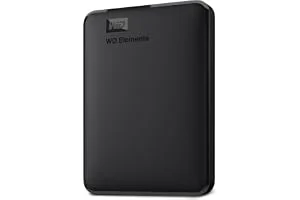
The cataloged WD Elements Portable B06W55K9N6 is also a 2TB bus-powered mechanical drive with USB 3.x and a Micro-B-style drive connection. It offers the same capacity-first concept, so the meaningful checks are exact model, delivered warranty, cable, formatting and current price rather than an assumed speed victory. Neither alternative removes the need for careful handling or a second copy.
Compare the new SanDisk Portable SSD when speed and shock tolerance matter more
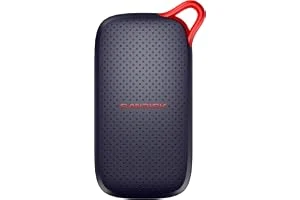
The cataloged SanDisk 1TB Portable SSD V3 uses USB-C and USB 3.2 Gen 2, with a published sequential read ceiling up to 1,000MB/s. It has half the advertised capacity of this Seagate and costs more per terabyte, but flash storage has no spinning disk and is better suited to frequent travel and active project transfers. Real speed still depends on the source, cable, port and workload.
The buying call
Choose the Seagate STGX2000400 when the priority is two terabytes of portable, bus-powered capacity for backups or archives and mechanical-drive care is acceptable. Compare WD Elements on exact warranty and price, or choose the SanDisk SSD for a faster, USB-C, one-terabyte working drive. Ryan has not claimed to own or benchmark this exact unit; this guide uses Seagate, WD and SanDisk documentation and does not invent transfer results or reliability claims.
Compare the shopping options
WD Elements Portable 2TB — another capacity-first bus-powered hard drive
SanDisk Portable SSD V3 1TB — faster USB-C flash storage with less capacity
Sources and review basis
Researched November 20, 2026. Ryan’s own experience is attributed where supplied. Other judgments are buying advice based on the cited product information, not a hands-on comparison or laboratory test. Prices and availability are checked at the retailer.
- Seagate official Portable Drive data sheet for STGX2000400 capacity, interface, dimensions and included items
- Seagate official support page for Portable Drive model STGX2000400
- Amazon listing for Seagate Portable Drive 2TB, ASIN B07CRG94G3 (paid link)
- WD official warranty matrix covering WD Elements Portable model families
- Amazon listing for WD Elements Portable 2TB, ASIN B06W55K9N6 (paid link)
- SanDisk official Portable SSD V3 1TB specifications
- Exact-ASIN record linking B0H4H1SNMY to the 1TB 1,000MB/s new model
- Amazon listing for SanDisk Portable SSD V3 1TB, ASIN B0H4H1SNMY (paid link)